
01
An arrow and an honest distance.
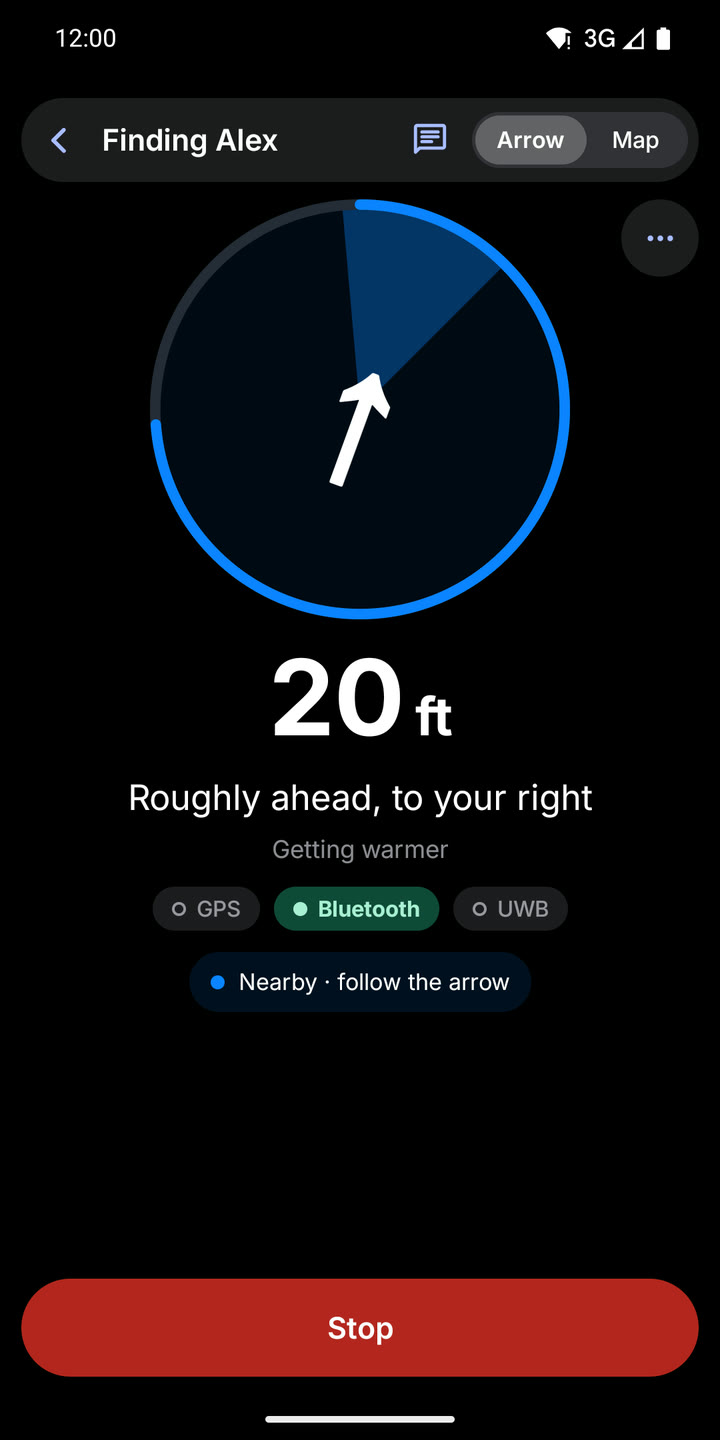
Nearby, the app points the way and gives a distance in feet, called an estimate when it is one. It gets sharper on phones that support it, and it says when it cannot tell the way.
Case study · Our first product
Finding the person you came with, in a crowd. Built by a small team with the latest tools: two phone platforms, consent designed in from the first screen, and both app stores prepared for from the first week.
The problem
Calling does not work in the noise, “where are you?” gets “by the stage”, and a map pin is a hundred people wide.
Two people come to an event together and get separated. The job was narrow on purpose: help people who already know each other find each other again, nearby first, farther apart only when both agree, and stop the moment either of them wants to.
The brief we wrote first
How it was built
A small team, the latest tools at every step, and a person deciding every release.
What we built
Every picture below is the app as it ships to testers, with the sample name Alex.
01
Nearby, the app points the way and gives a distance in feet, called an estimate when it is one. It gets sharper on phones that support it, and it says when it cannot tell the way.
02
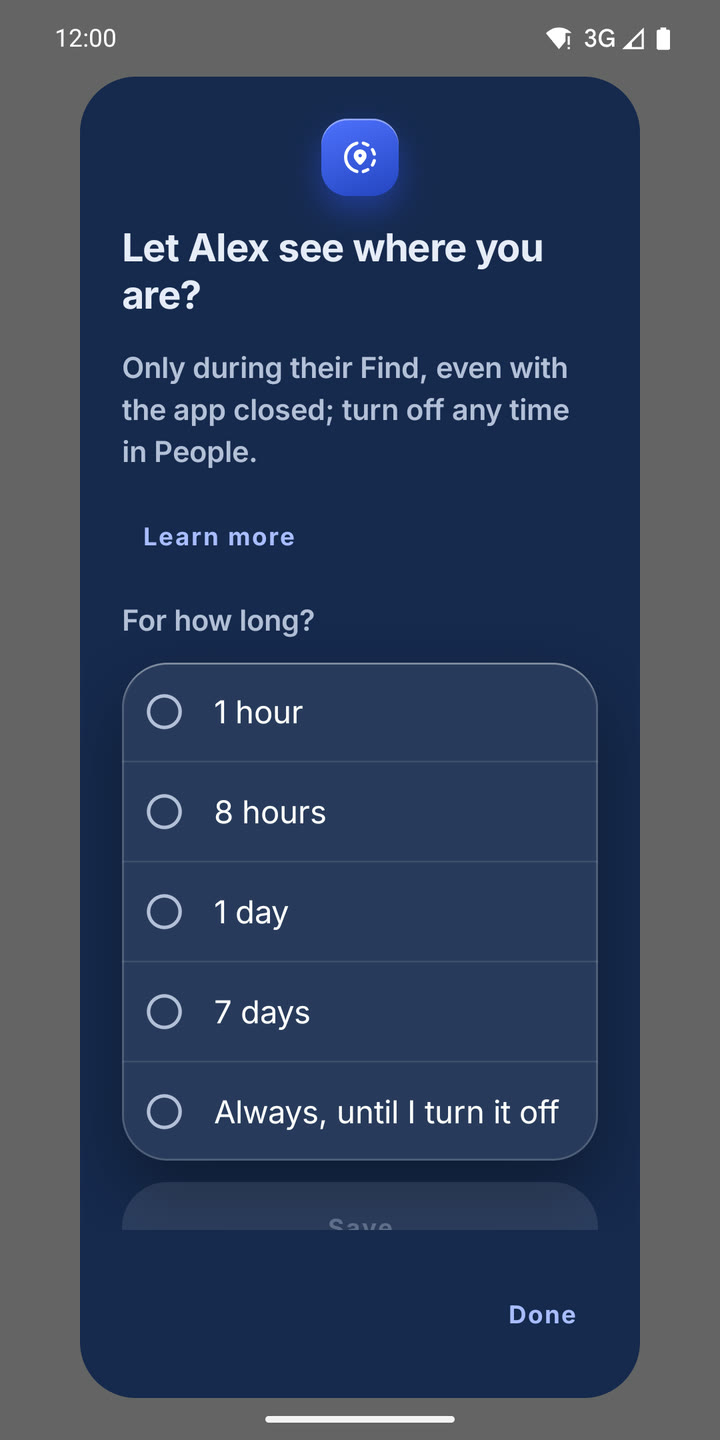
Before one person can see where the other is, the app asks, says for how long, and says where the off switch is. Nothing is shared until that answer is given.
03
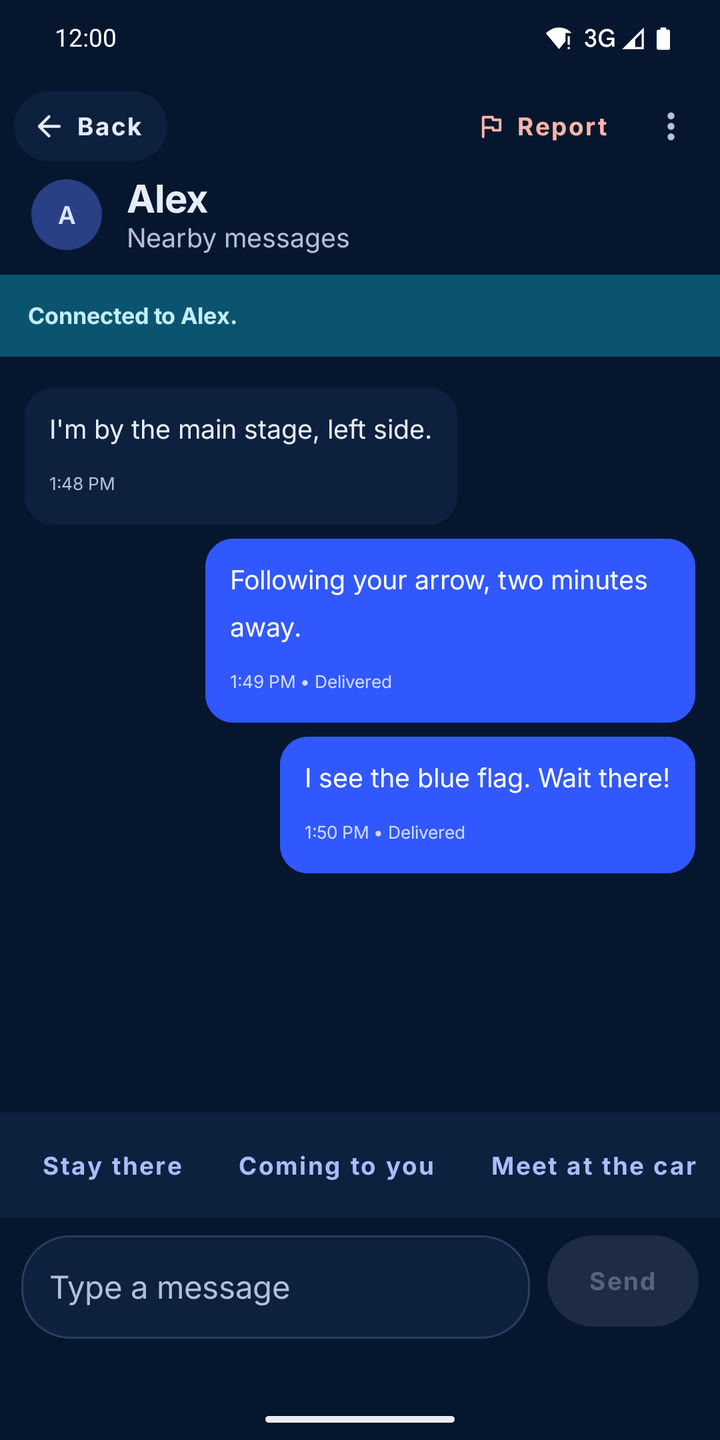
Once two phones are connected nearby, short messages go straight between them during a Find, with quick replies for when typing is hard.
04
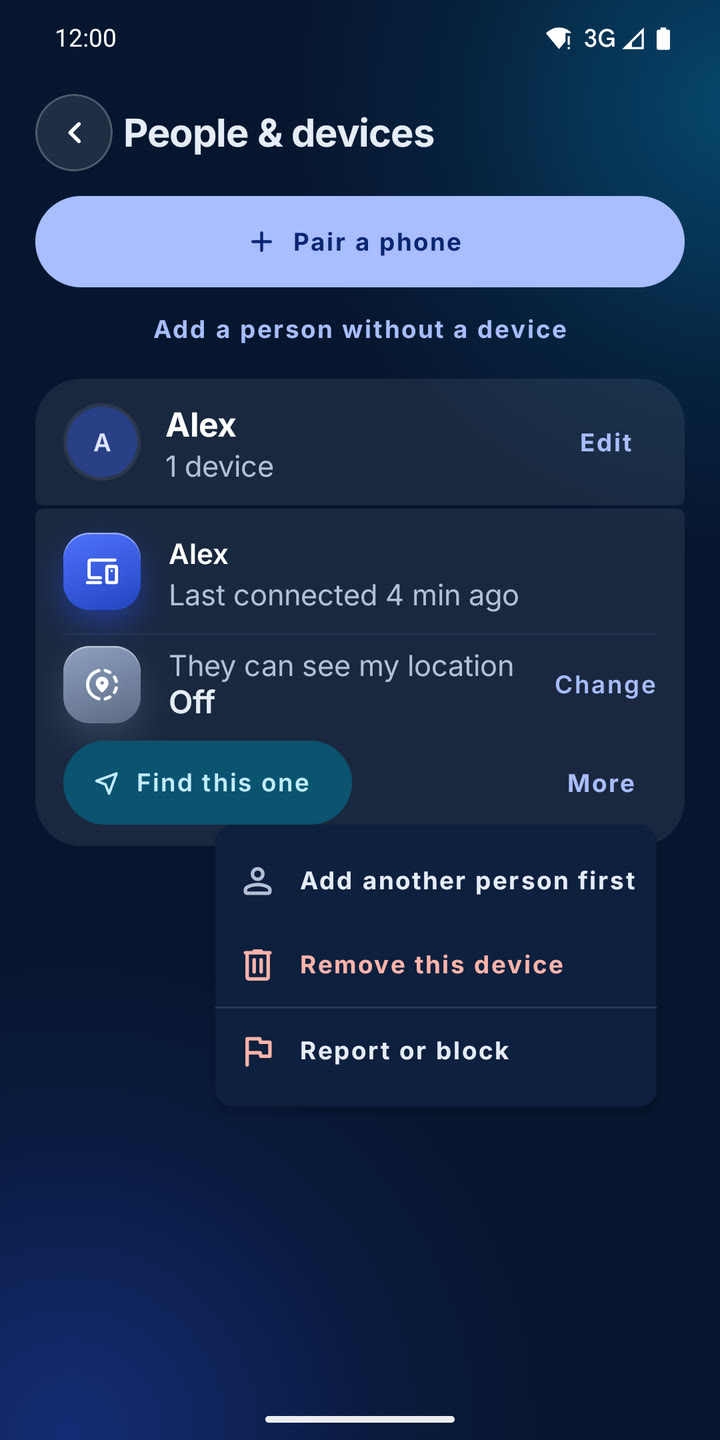
Every person and device is listed with who can see whose location, and every connection can be changed, removed, reported or blocked in two taps.
05
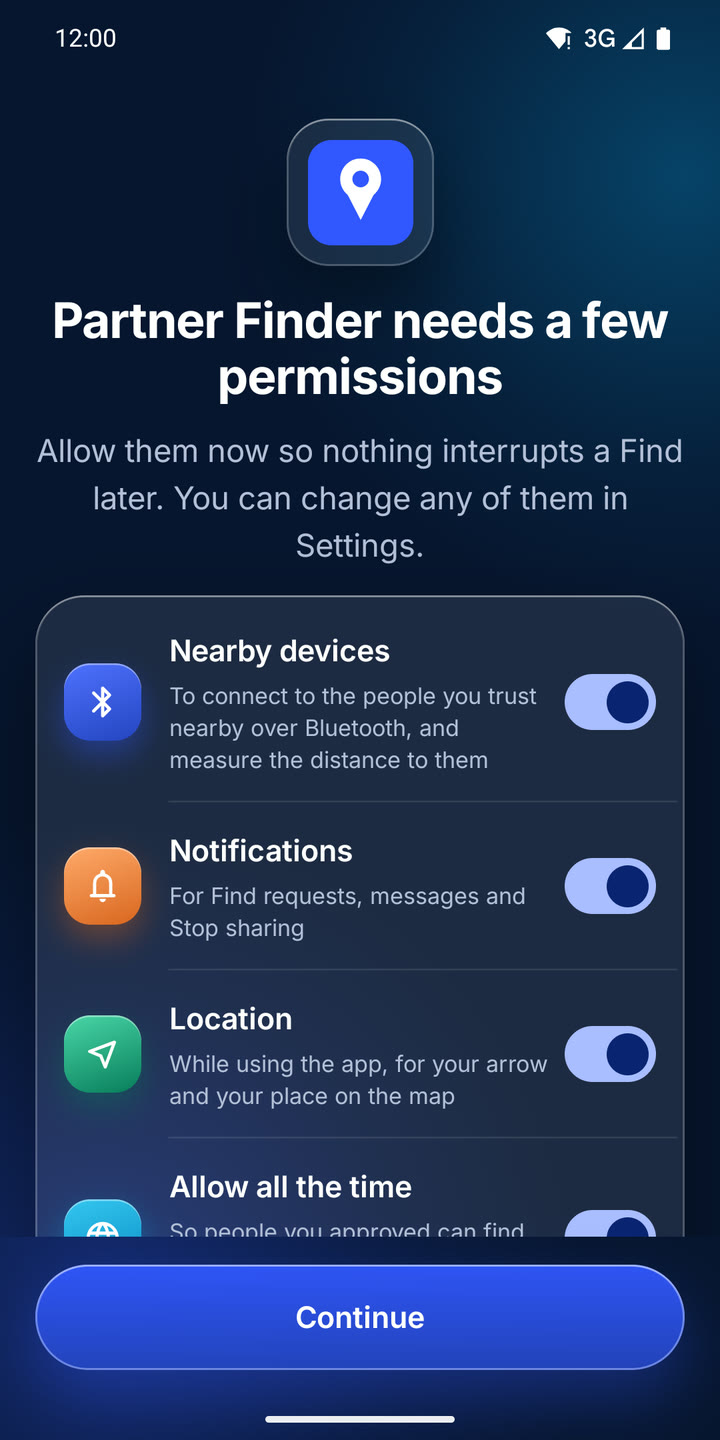
Phones put apps to sleep in different ways. A checklist shows each setting that matters and how to fix it, in plain words.
06
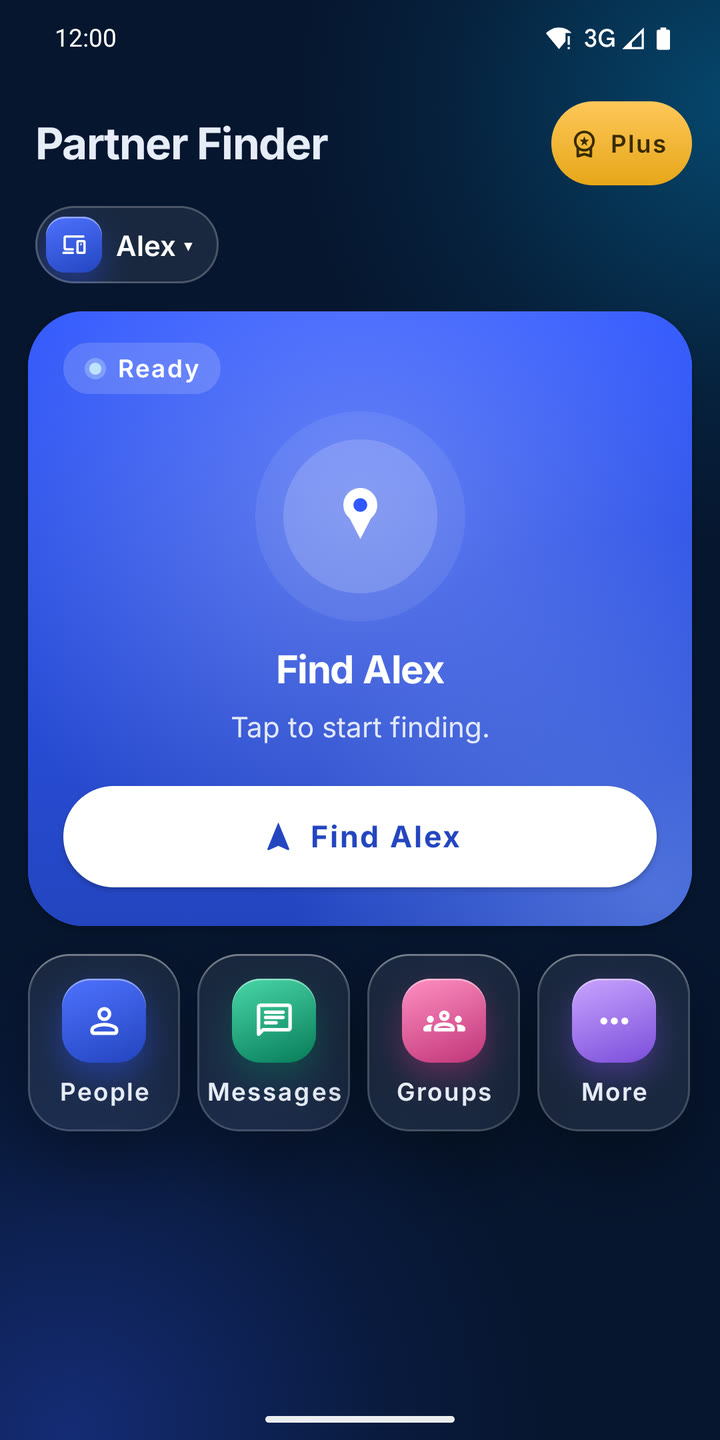
The first screen has one job: find the person you came with. Everything else is one tap away.
Everything around the app
An app is the part people see. Most of the work is the part they never have to think about.
What it taught us
Deciding what the product must never do, before the first screen, made every later decision faster and every policy shorter.
Radios, batteries and store rules only show their real behaviour on real devices in real crowds. Testing on a desk finds only the easy problems.
The latest tools made the pace possible. Reading every change before it was kept is what made the pace safe.
Work with us
Write to us with what you are trying to do. We answer with questions, not a quote.